
Two Hours Late. £26 Back. The Maximum Delay Repay Claim — and How to Make It.
A two-hour delay on Greater Anglia is the maximum Delay Repay tier: 100% of the return fare. For an annual season ticket holder from Colchester, that is £26.08. The worst journey of your month is also the most valuable claim — and the one least likely to be filed.
Rail Repay Podcast
Two Hours Late. £26 Back. The Maximum Delay Repay Claim — and How to Make It.
Enjoy the related dialogue — a two-voice conversation on this topic.
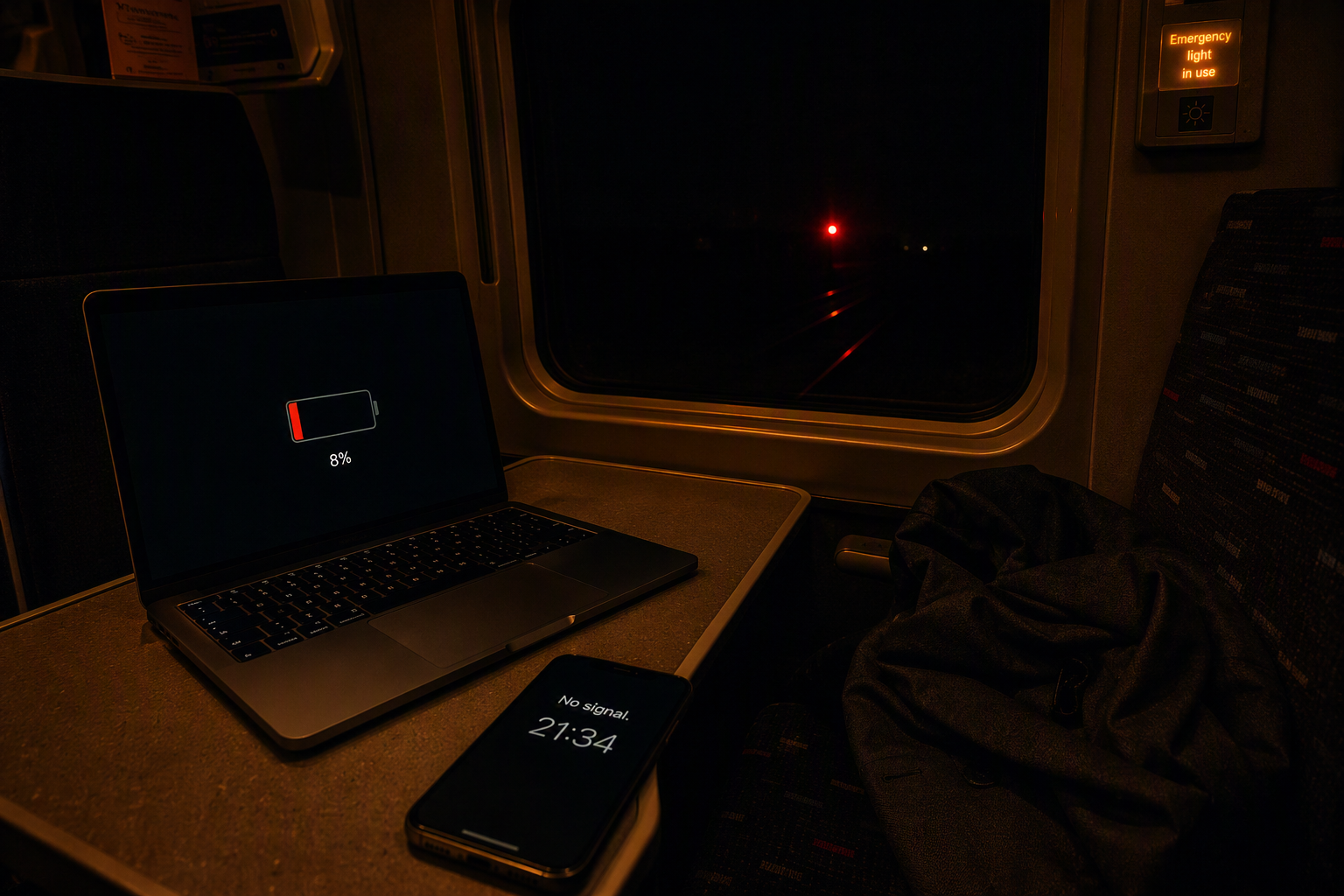
The 07:44 from Colchester. Not delayed by fifteen minutes. Not by thirty. The signal failure outside Chelmsford became a "fault with the train" announcement south of Stratford, which became fifteen minutes in a dark carriage somewhere outside Harold Wood with no information and no phone signal.
You arrived at Liverpool Street two hours and four minutes late. You missed two meetings. By the time you got to your desk, you just wanted a glass of water and for the day to start differently.
You did not claim the £26.08 you were owed.
Neither did most of the other people in that carriage.
The 120-Minute Tier
The Greater Anglia Delay Repay scheme has four compensation tiers based on how late your train arrived:
| Delay at destination | Compensation |
|---|---|
| 15–29 minutes | 25% of single-leg value |
| 30–59 minutes | 50% of single-leg value |
| 60–119 minutes | 100% of single-leg value |
| 120+ minutes | 100% of return value (2 × single leg) |
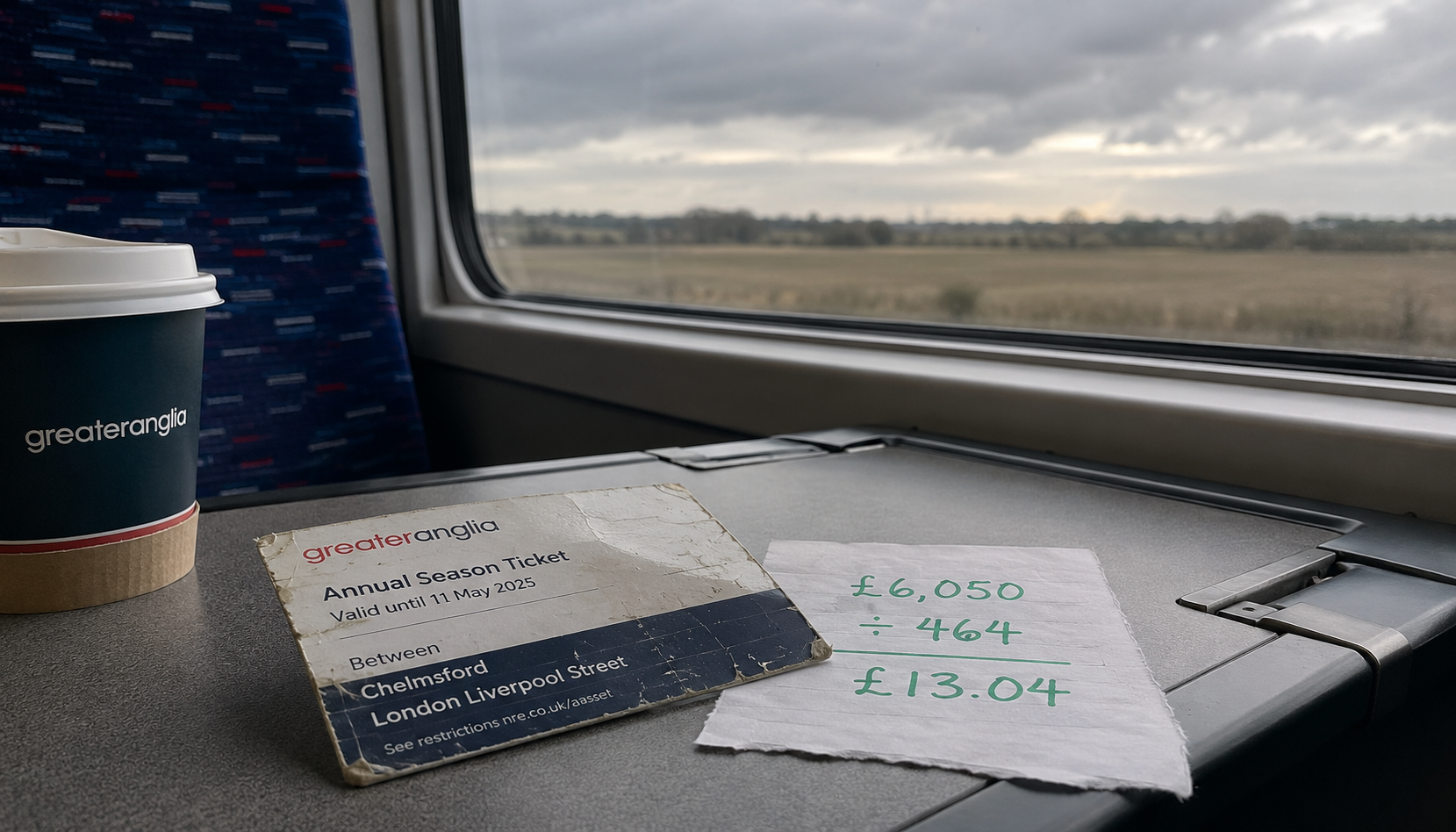
The 120-minute tier is the maximum. It pays the full return fare value — as though the journey, both ways, was a total loss. For a passenger on a £6,050 annual season ticket from Colchester to Liverpool Street, where the single-leg value is approximately £13.04, a two-hour delay triggers a claim of approximately £26.08.
That is the upper bound of what Delay Repay can pay in a single transaction. It requires a train that was genuinely catastrophic. And it is, statistically, the category most likely to go unclaimed.
The Exhaustion Paradox
There is a pattern in how people respond to major delays that works almost perfectly against claiming. The longer the delay, the more exhausted and disoriented you are by the end of it. The more valuable the claim, the less energy you have to file it.
A fifteen-minute delay is annoying. You are still functional. The form feels manageable. You might even open it on the train.
A two-hour delay is different. By the time you arrive, you have run through every emotion: frustration, then resignation, then a kind of blank detachment. You get to wherever you were going. You deal with the consequences. The claim — the most valuable one you could make — sits unclaimed in your memory until the 28-day window closes.
Rail Repay catches this delay automatically, the same day it happens. The alert arrives when you are still experiencing the delay, not twenty-seven days later when you have almost forgotten it. The AI-drafted claim text is ready to copy before you have had time to settle into resignation.
The Thing Nobody Mentions
Here is something that does not appear in any official guidance: the two-hour tier is also the most likely to involve a "Did Not Travel" element. If the delay was announced before you departed and you chose not to travel, a separate refund process may apply for season ticket holders — potentially in addition to, or instead of, a standard Delay Repay claim. It is worth checking with Greater Anglia directly if you stayed home due to a known major disruption.
The two-hour delay that you did travel through, however — the one where you sat in the dark outside Harold Wood — is straightforwardly claimable under Delay Repay 15. No ambiguity.
One Practical Note on Payment
When submitting a Delay Repay claim to Greater Anglia, select bank transfer as your payment preference. Payment typically arrives within five working days.
A Two-Hour Delay in Context
£26.08 is not a life-changing amount. But it is:
- •A round at the pub you did not have
- •A decent lunch for two
- •Three months of a Spotify subscription
- •The exact amount Greater Anglia contracted to deliver you — on time — and did not
That last framing is perhaps the most useful one. The compensation is not charity from the train company. It is the financial consequence, defined in the terms of service you accepted when you bought the ticket, of a service failure. You are not asking for a favour. You are completing a contractual transaction.
The 120+ tier is the largest version of that transaction. If your train arrived more than two hours late in the last 28 days, the window to complete it is still open.
Check what you may be owed — free, no card needed — at railrepay.co.uk.
Sources:
- •National Rail Conditions of Travel 2025, Clause 32 — nationalrail.co.uk
- •Greater Anglia Delay Repay 120+ tier — greateranglia.co.uk
Stop leaving money on the platform
Check what your Greater Anglia route may owe you — in 60 seconds
Free delay alerts + AI claim drafts. No card required. You stay the claimant.
You might also like
This article is informational and is not legal advice. See the legal basis and sources. The train company decides the final eligible amount after validating your ticket, journey, and delay evidence. Legal basis and sources