
The 28-Day Clock: Why Most Delay Repay Claims Never Get Made
Every Greater Anglia delay starts a strict 28-day compensation window. ORR research shows roughly 70% of eligible passengers never claim — not because they can't, but because time and friction do the train company's job for them.
Rail Repay Podcast
The 28-Day Clock: Why Most Delay Repay Claims Never Get Made
Enjoy the related dialogue — a two-voice conversation on this topic.
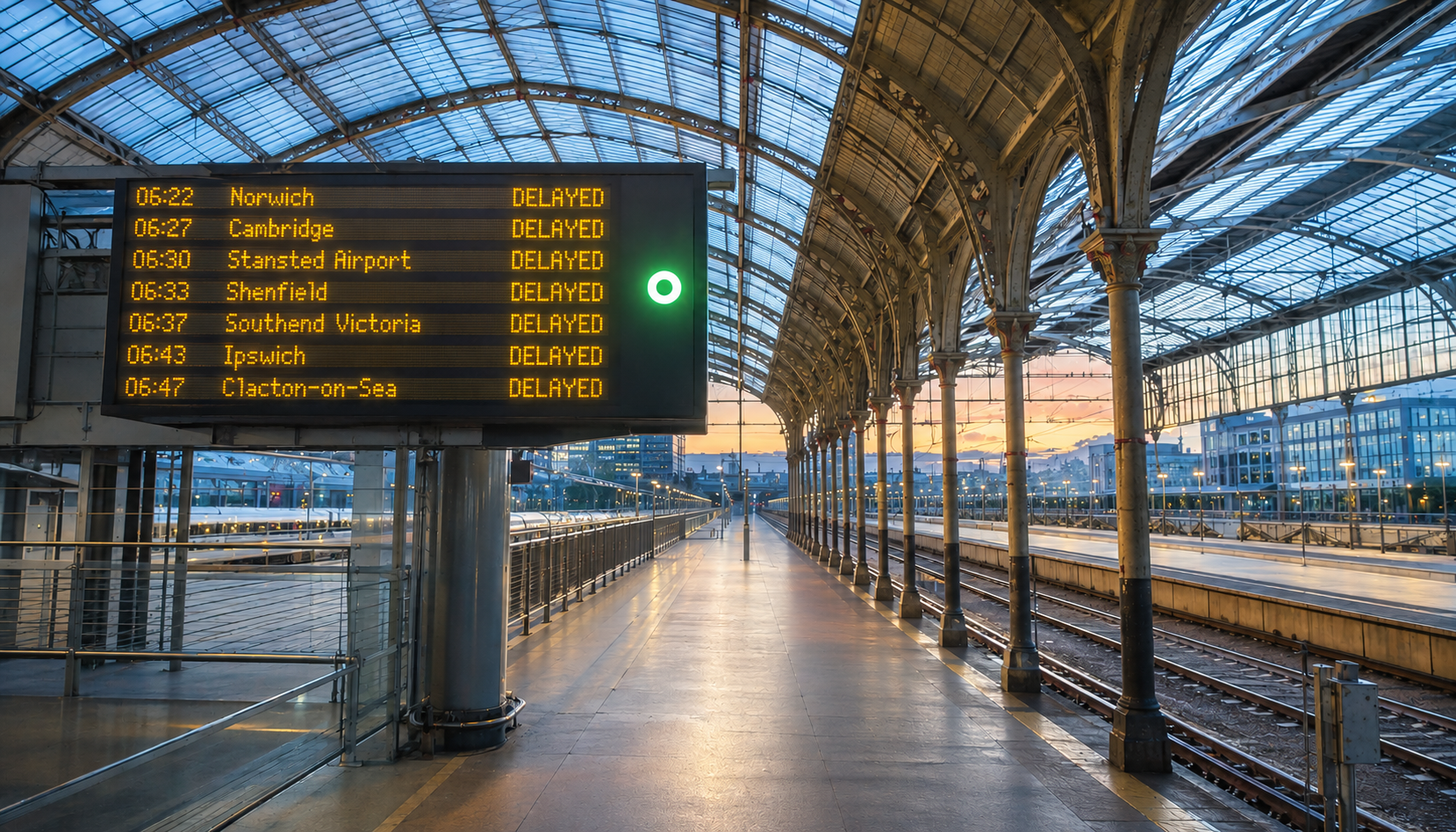
The train was late. Again.
You already know that voice over the tannoy. "This service is delayed due to a fault with the train." You have heard it more times than you care to count. You made it to work — barely — squeezed into a carriage that smelled like someone's coffee and someone else's morning — and then got on with your day. You told yourself you would sort out the Delay Repay claim later.
And then life happened.
I know. I commute on the same line. I have stood on the same Colchester North platform watching the same board tick from "On time" to "Delayed" without explanation. I have watched the gateline queue at Liverpool Street stretch past the coffee kiosk at five to nine. I have also, for longer than I should admit, done exactly what most passengers do — told myself I would claim later, and then didn't.
That is how most Delay Repay compensation disappears. Not because passengers are ineligible. Not because the process is impossible. But because of a quiet, strict, 28-day deadline that most people forget exists — and a human tendency to put off anything that feels even slightly inconvenient.
The 28-Day Rule Is Non-Negotiable
Under the National Rail Conditions of Travel (2025, Clause 32), passengers are required to submit Delay Repay claims within 28 days of the delay. Greater Anglia, along with most UK operators running the Delay Repay 15 (DR15) scheme, enforces this window strictly. Once it passes, your claim is almost certainly gone.
Twenty-eight days sounds generous. In practice, it is not.
Day one: you are exhausted and frustrated. The last thing you want to do is fill in a compensation form. Day three: the anger has faded, and the claim feels less urgent. Day ten: you half-remember you meant to do it. Day twenty-eight: the window closes. The money stays with the train company.
The Numbers Are Stark
According to ORR (Office of Rail and Road) consumer research (2024), the most common reasons UK rail passengers give for not claiming Delay Repay are:
- •"The process is too time-consuming or complicated" — cited by around 42% of eligible non-claimants
- •"I forgot or ran out of time" — cited by around 28%
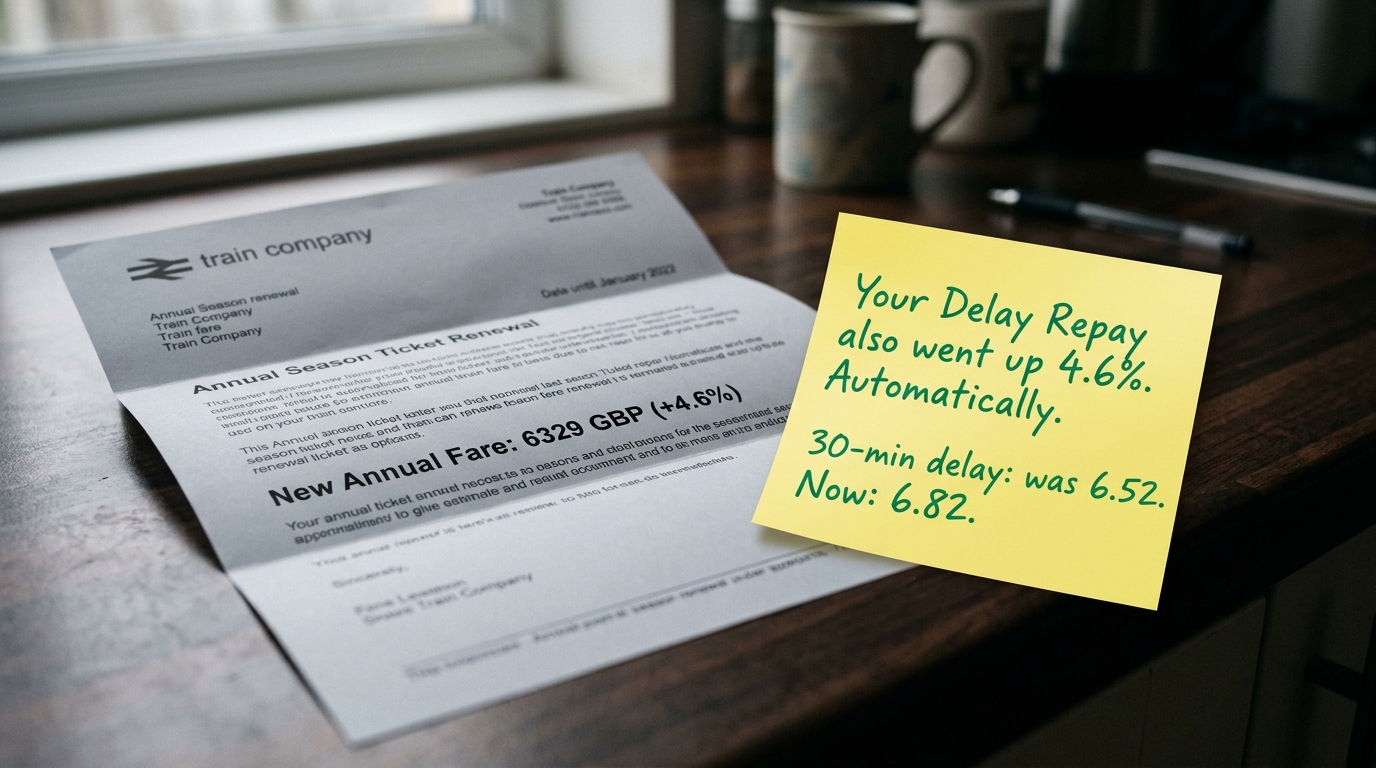
For a commuter on the Colchester to Liverpool Street run — an annual season ticket costs approximately £6,050 in 2025-26 — the cumulative cost of unclaimed delays is significant. Greater Anglia's own performance data, tracked by ORR, suggests that passengers on busy commuter routes can experience 15 or more qualifying delays per year. At an average compensation of around £5 per 15-to-29-minute delay, that is £75 or more per year — quietly left on the platform.
One small thing worth knowing: when you reach the payment step, select bank transfer rather than PayPal or a card refund. Greater Anglia's payout process is more straightforward that way, and the money lands directly in your account within five working days.
The Psychology of the Missed Claim
There is a well-documented pattern in behavioural economics called present bias — the tendency to prioritise immediate comfort over future gain, even when the future gain is objectively more valuable. Combine that with the fact that the emotional intensity of a delay fades quickly once you have arrived at your desk, and you have a near-perfect recipe for inaction.
The train company does not need to discourage you from claiming. It just needs to make the process feel slightly inconvenient, and time does the rest.
This is not a criticism of passengers. It is a structural problem. And on a particularly grim Tuesday — the 07:44 late because the 07:21 was late, no explanation given, phone battery already at twelve percent — I decided I had had enough of losing money to a system designed, whether intentionally or not, to outlast my patience. So I built Rail Repay. Not to do anything remarkable. Just to close that gap.
How Rail Repay Changes the Timing
Rail Repay monitors your Greater Anglia route in real time using official departure and arrival performance data. When a qualifying delay is detected — 15 minutes or more at your destination — you receive an email alert the same day, often within hours of the delay.
That means you hear about the delay when your frustration is still fresh. You open your Rail Repay account and find the AI-drafted claim text ready to copy. The whole process takes three to five minutes at most. You paste it into the official Greater Anglia form and submit.
The 28-day clock has barely started — and you are already done.
No remembering. No calculating. No blank forms. Just a notification, an AI draft, and a copy-paste.
A Note on What Rail Repay Does — and Does Not — Do
Rail Repay does not submit claims on your behalf. You remain the claimant throughout. The AI drafts the text; you review it, copy it, and submit it to Greater Anglia's own Delay Repay portal yourself. The final decision on eligibility and compensation amount rests with Greater Anglia.
What Rail Repay does is remove the friction that causes most people to miss their window entirely.
The Takeaway
If your Greater Anglia train was delayed 15 minutes or more in the last 28 days, you may be owed compensation. The deadline is strict. The process does not have to be.
We are all on the same line. The least we can do is not leave money on the platform.
Check what you may be owed — free, no card needed — at railrepay.co.uk.
Sources:
- •National Rail Conditions of Travel 2025, Clause 32 — nationalrail.co.uk
- •ORR Passenger Experience Research 2024 — orr.gov.uk
- •Greater Anglia Delay Repay — greateranglia.co.uk
Stop leaving money on the platform
Check what your Greater Anglia route may owe you — in 60 seconds
Free delay alerts + AI claim drafts. No card required. You stay the claimant.
You might also like


This article is informational and is not legal advice. See the legal basis and sources. The train company decides the final eligible amount after validating your ticket, journey, and delay evidence. Legal basis and sources